Choosing where to live in Connecticut is a deeply personal decision. It is less about finding the objectively “best” city and more about discovering the place whose daily rhythms, community feel, and trade-offs align closely with your preferences and lifestyle. The way you move through your day, the atmosphere around you, and practical aspects like commuting and housing shape the lived experience more than any abstract ranking.
Stamford offers a compelling starting point for exploring life in Connecticut’s cities. Positioned as an urban-suburban hybrid, Stamford blends its own distinctive city identity with an important role in the New York City commuter ecosystem. It represents a type of experience where energetic urban pockets mix with quieter residential areas, all within reach of Manhattan.
This post delves into the lived experience of daily life in Stamford compared with other Connecticut cities, exploring how environment, housing, commuting, financial rhythms, and social life each craft a different kind of life. Understanding these differences offers insight into which kind of community might suit you best.
How Daily Pace and Environment Differ

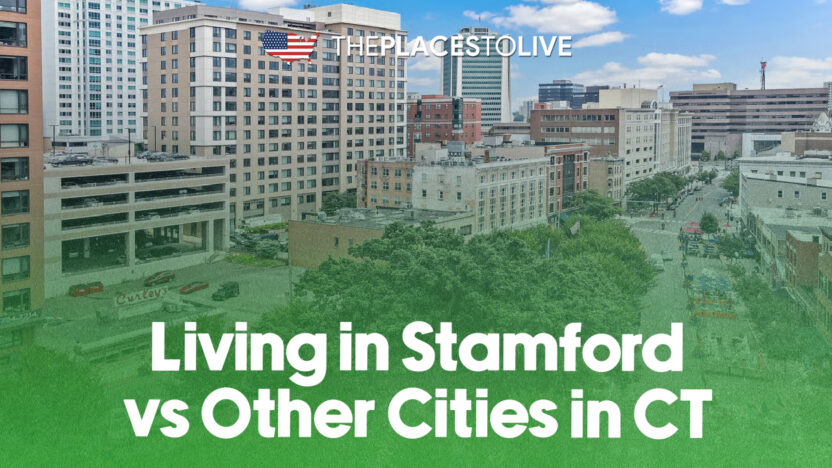
Living in Stamford Connecticut means inhabiting a space where urban energy and suburban calm coexist. The city’s proximity to New York City and concentration of business centers shape its daily rhythm. Neighborhoods like Downtown, Harbor Point, and Springdale form walkable hubs alive with shops, restaurants, fitness studios, and parks. In these pockets, you encounter lively sidewalks, spontaneous encounters, and easy access to amenities.
However, Stamford is not uniformly bustling. Residents in Westover, Turn of River, and North Stamford experience quieter, more residential surroundings. Here, streets are calmer, and the pace allows for moments of suburban tranquility amid the city’s urban hum.
This variation within Stamford contrasts with many other cities in Connecticut, where the daily tempo tends toward a slower, more deliberate cadence. These communities often have lower density, quieter streets, and greater separation between where people live and work. Reliance on personal vehicles to bridge longer distances is typical, replacing spontaneous walking trips to local shops or cafes.
These differences in environmental rhythm have practical consequences. In Stamford, residents might pop out for coffee or a quick errand on foot, weaving daily activity fluidly into their surroundings. In more relaxed Connecticut cities, errands usually require planning and driving, and social interaction often demands intention rather than occurring naturally. This fundamental distinction colors the texture of everyday life, giving each place its unique shape.
Housing and Space Expectations
Stamford’s housing landscape reflects its dual urban-suburban character. Within the city limits, options vary widely—from compact, amenity-rich apartments and luxury waterfront rentals in Downtown and Harbor Point to traditional single-family homes nestled in Westover or North Stamford. Depending on where you live, your experience of space and community can feel vastly different.
Apartment dwellers in Stamford often enjoy the convenience of nearby services and neighbors close enough to bump into casually. This fosters a sense of proximity, where your living environment encourages frequent local interaction and walkability. The trade-off is usually less private outdoor space, but offset by urban perks.
In contrast, many other cities in Connecticut emphasize more spacious living environments. Larger lots, private yards, and a focus on single-family homes create daily realities built on privacy and personal space. These settings prioritize distance from neighbors and a physical separation from commercial centers, making car travel a daily necessity for accessing services.
Green space and neighborhood character also vary. For example, Norwalk offers more publicly accessible waterfront and parks than Stamford, which can influence where residents spend leisure time and how nature integrates into their routines. Having more accessible green areas nearby encourages outdoor activities, picnics, and informal gatherings that shape the social fabric differently than more densely built neighborhoods.
Thus, housing in Stamford encourages an active, convenience-driven lifestyle with varied architectural forms, while many other Connecticut communities nurture quieter, space-rich living that emphasizes solitude and planned outings over spontaneous local engagement.
The city is also well matched to those seeking housing flexibility. Its variety—from downtown apartments to waterfront rentals and single-family homes in suburban-feeling neighborhoods—caters to residents who want to explore different housing types or neighborhoods as their life circumstances evolve, especially newcomers unsure whether to rent or buy initially.
For people whose social and recreational life revolves around structured activities—running clubs, fitness studios, hobby groups, or scheduled cultural events—Stamford’s social fabric offers many outlets. Its energetic social scene, walkable neighborhoods, diverse restaurants, nightlife options, and waterfront spaces appeal to those drawn to a lively, fast-moving environment.
Walkability factors prominently in Stamford’s appeal. Many who prioritize easy access to urban amenities while retaining pockets of calm appreciate Stamford’s blend of city energy with quieter residential corners. This urban-suburban hybrid character offers a distinctive lifestyle rhythm that fits residents motivated by a blend of pace and convenience within a commuter city framework.
Who Might Prefer Other Connecticut Cities
Other Connecticut cities present a compelling choice for individuals whose priorities diverge from Stamford’s urban-suburban, commuter-centric life. Those valuing quieter, slower daily rhythms with less density may find greater comfort in towns offering a more relaxed pace. This typically suits residents working locally or remotely who do not need frequent access to NYC commuter infrastructure.
People who prefer spacious single-family homes with large yards and privacy often lean toward communities where such housing predominates. For them, the trade-off of less walkability and more driving aligns better with their lifestyle preferences than Stamford’s denser, mixed-housing neighborhoods.
Residents seeking deeper rootedness through neighborhood tradition and long-term relationships frequently feel more at home in cities where social connections grow organically from shared history and geographic continuity. These communities emphasize stability and social continuity over the activity-driven networks common in Stamford.
Culturally, some individuals may be drawn to places with more concentrated arts and cultural scenes. Cities known for vibrant artistic communities offer an identity distinct from Stamford’s activity-based social fabric. Similarly, those prioritizing abundant green space and accessible waterfront often gravitate toward cities with more public parks and natural amenities, which shape recreation and social routines differently than Stamford’s urban waterfront.
In essence, these other Connecticut cities meet the needs of those who prioritize space, calm, tradition, and cultural depth over the urban commuter advantages that Stamford provides.
Conclusion
The choice between living in Stamford versus other cities in Connecticut ultimately comes down to lifestyle alignment rather than objective “best.” It is a question of where your daily rhythms, community atmosphere, housing preferences, commuting realities, financial comfort, and social desires find their best fit.
Stamford offers a distinct urban-suburban blend, robust connections to New York City, housing variety, and a vibrant, activity-driven social scene. Its appeal lies in balancing commuter access with walkability and a fast-paced lifestyle. Meanwhile, other Connecticut cities provide alternatives emphasizing slower pace, more spacious housing, deeper community traditions, or focused cultural identities.
Reflection on what daily environments feel most like home—whether density or space, structured social activity or tradition, urban convenience or suburban quiet—guides the decision. Connecticut’s diversity ensures there is a community suitable for every preference, making thoughtful lifestyle matching the key to true satisfaction.
Living in Stamford vs other cities in Connecticut is less a contest than a search for where your life best fits.